
The Tragic Hero
Oedipus Wrecks

We know the song and love it.
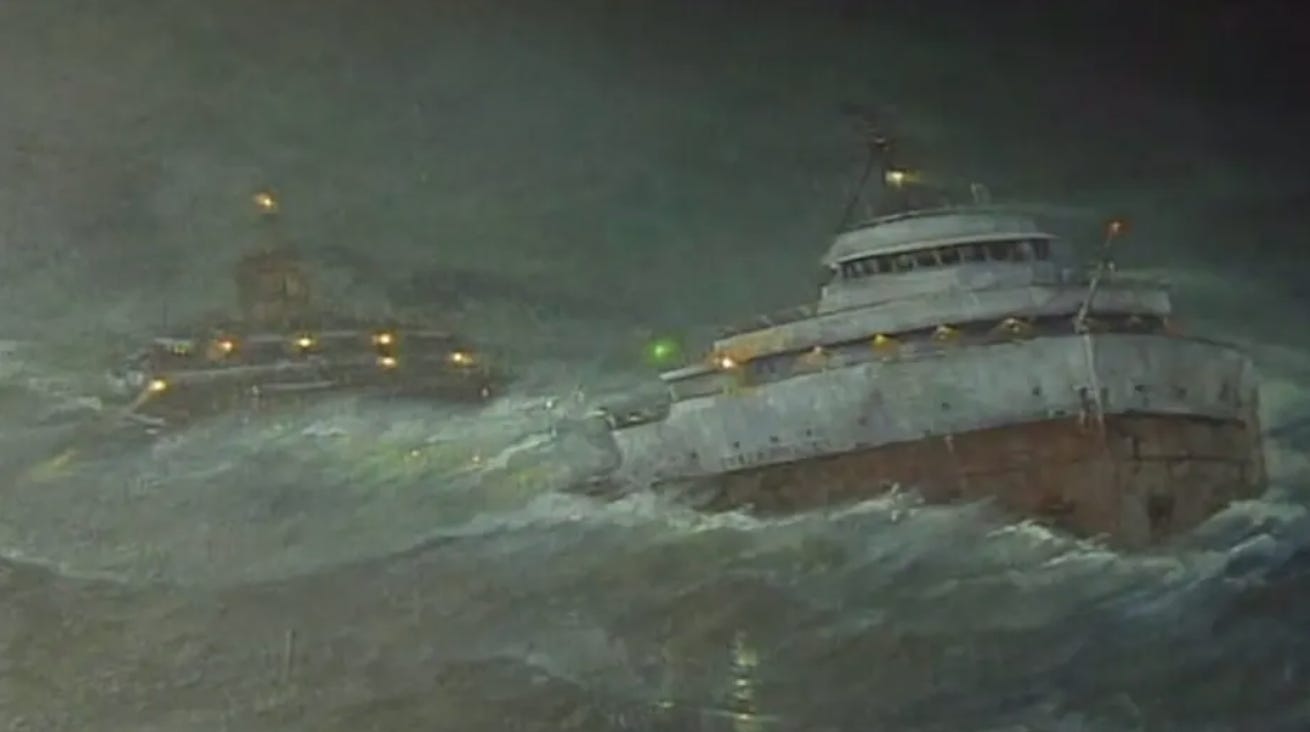
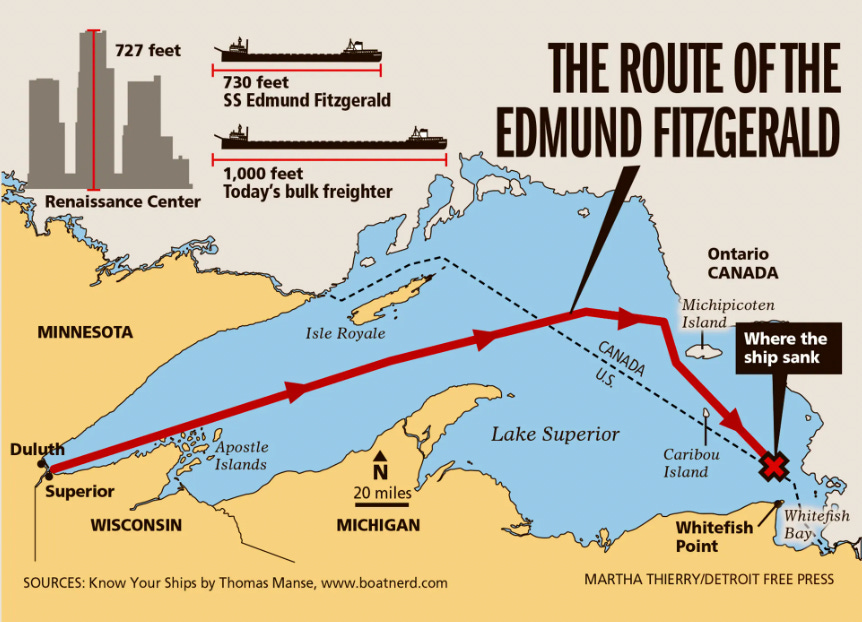
The Canadian troubadour, Gordon Lightfoot, first recorded “The Wreck of the Edmund Fitzgerald” in 1976 and it has been haunting listeners ever since. The song narrates the final catastrophic voyage of the Great Lakes freighter, the Edmund Fitzgerald, which sank in Lake Superior in November 1975. At the exact midpoint of the ballad Lightfoot sings plaintively, “At seven p.m., a main hatchway caved in, [the cook] said “Fellas, it’s been good to know ya.”1 The old cook’s farewell to the “crew and good captain” is devastating in its composure. We are astounded by his casual recognition of the doom that is upon him and his shipmates, and awed by the grace of his resignation.
And, so it is with tragedy, which inheres not in the events themselves but rather, in the recognition (by someone) of the inevitability of those events.
Take Oedipus, the hapless and embattled protagonist of Oedipus Rex. Sophocles, the play’s author, establishes in the opening scene that Oedipus, King of Thebes, has a problem: the city of which he is sovereign is “tossed on a murdering sea” and cannot “lift [its] head from the death surge.” Furthermore, the city’s “herds are sick; children die unborn and labor is in vain.” (Sophocles, 4)2 The denizens of Thebes suffering mightily implore their king to rescue them from their afflictions. To do this, Oedipus needs to figure out calamity has struck, so he sends his brother-in-law, Creon to consult the oracle of Apollo at Delphi. Creon returns with a grim message: Apollo has, indeed, sent a plague upon Thebes because the city shelters “an old defilement,” a murderer who killed Laios, the King of Thebes, before Oedipus. If Thebes is to be cured of its torments, Apollo commands that Oedipus identify the criminal festering in the city and expel him from its environs. And, though soon after Oedipus learns from the crotchety old soothsayer, Teiresias, that the murderer he seeks is none other than himself (you heard that right), Oedipus refuses to believe him. Oedipus pursues the quest of the murderer’s identity with the zeal of a noir detective, hurtling himself to self-discovery and his own abominable dissolution.
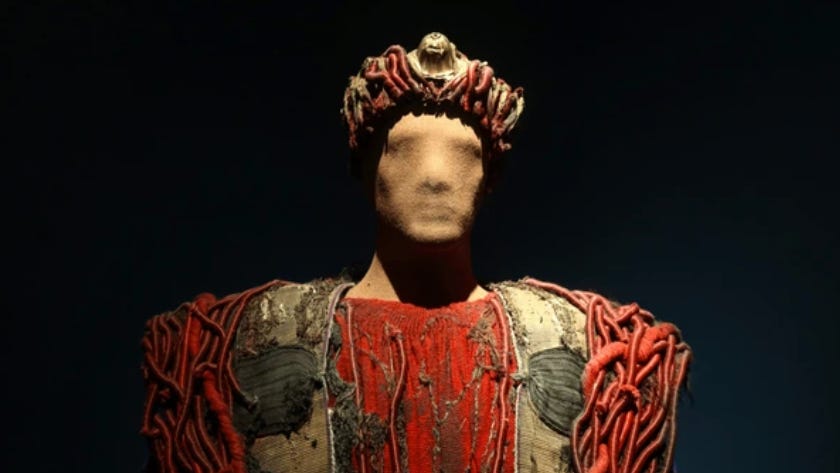
Reading Oedipus Rex is a curious experience because the revelation that would normally come at the play’s resolution—the identity of the murderer—is disclosed at the outset. This is an unusual and counter-intuitive choice for a narrative which is essentially structured as a mystery. Had Sophocles deferred Oedipus’s revelation that he is, in fact, the murderer until the play’s final scene, the culmination of the narrative would have been defined by an act of discovery: Oedipus discovers that he is the murderer. Instead, in revealing the identity of the murderer at the beginning of the narrative, Sophocles shifts the audience’s attention from what happened to how Oedipus comes to know it, effecting a resolution that is rooted not in discovery of truth but, rather, in its recognition.
Tragedy, then, is a form of narrative which features an act of recognition by the tragic hero of his impending demise which he has no means to avert. And, the reason the tragic hero is unable to arrest his advance towards ruin is because the events which lead to his disintegration are in the past and are thus, immutable. Early in Oedipus Rex, Jocasta, the wife (and as it turns out the mother) of Oedipus recounts to him a prophecy foretelling that Laios (Jocasta’s husband before Oedipus) would be killed “by the hand of his own son.” (Sophocles, 38) Jocasta on Laios’s command thus surrenders her newborn to a Shepherd and instructs him to leave the child on a “lonely mountainside” (Sophocles, 38) to die. With confidence Jocasta then tells Oedipus that there is no way Laois was killed by his own son because the child could not have survived the elements and the wild. Well, it turns out, the child did not die. But, rather, unbeknownst to Laios and Jocasta, he was rescued by a Messenger and taken to the city of Corinth. There he was adopted by the king and the queen who never told him that he was not theirs.
In Oedipus Rex prophecy is understood to be the foretelling of events that must come to pass because they are decreed by god and thus, inevitable. Inherent to a tragic mode of storytelling is that past events are determinative of the present. Whereas discovery implies the discernment by the hero of new knowledge, recognition is a cognitive act which is necessarily retrospective – an awareness of what has always been true but previously unseen. In Scene II of the play Oedipus and Jocasta have the following exchange;
Jocasta: Laois was killed by marauding strangers where three highways meet. (Sophocles, 38)
Oedipus: When? (Sophocles, 39)
Jocasta: We had the news not long before you came. (Sophocles, 39)
Oedipus: And I came to this country where, so you say, King Laois was killed. There were three highways coming together at a place I passed.” (Sophocles, 43)
Two events discerned to be distinct in the past are recognized by Oedipus to be one and the same – a unity wrought by time (the murder happened just before Oedipus arrived in Thebes) and by place (where three highways meet). When Oedipus understands that he himself killed Laois, he is not learning something new. He is, instead, recognizing the truth about something old. The tragedy of Oedipus does not reside in his apprehension that his past deeds are immutable. Rather, the play’s tragic form derives from Oedipus’s discovery in the final scene of the radical finality of his present – the absolute predetermination of his future by a set of events in his past outside the purview of his personal agency and control. As an axiom with existential proportions, it could not be more shattering. It is no wonder Oedipus’s final act is to gouge his eyes out. The meaning is clear: to see is to be blind and to be blind is to see. To know is to know nothing.
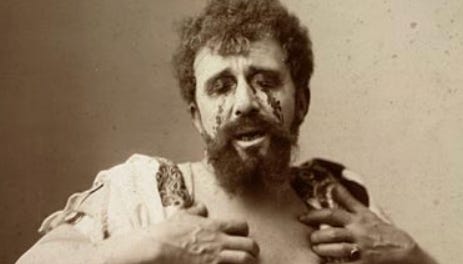
That the Shepherd initiates the chain of causation which results in Oedipus’s doom at the resolution of the play is cruel in its irony. As one who properly “guides or directs in a particular direction,”3 it can certainly be said that the Shepherd in failing to kill the infant Oedipus on the lonely mountainside does exactly that. Oedipus asks the Shepherd why he didn’t leave him as a child to die as Jocasta had instructed. The Shepherd tells Oedipus, “I pitied the baby, my King.” (Sophocles, 64) It is at this moment that the reader is invited to consider what I refer to as the “if only” event in tragic structure or a “conditional futility.” Tragedy is seeded with the possibility of an alternate sequence of events—one in which the fate foretold might somehow have been escaped: if only the Shepherd had left Oedipus to die on the mountainside, he would not have murdered his father and fathered children with his mother; his actions would not have caused Thebes to be “tossed on the murdering sea;” and, he would not have gouged his eyes out before leaving the city, once a great king and now a criminal.
In Poetics Aristotle states that tragedy “imitate[s] actions which excite pity and fear, this being the distinctive mark of tragic imitation.” (Aristotle, 22)4 He goes on to state, “pity is aroused by unmerited misfortune, fear by the misfortune of a man like ourselves.” (Aristotle, 23) To hear a tragedy, Aristotle continues, is for the reader to “thrill with horror and melt to pity at what takes place.” (Aristotle, 25) As the narrative unfolds in Oedipus Rex, we are afraid for Oedipus as he works out, for example, that Laios is his father and we pity him after he recognizes that he is, indeed, his father’s murderer. Sophocles structures Oedipus Rex as a series of revelations, each one causal and carrying increasingly severe consequences for the hero. The progression not only heightens the tension but also deepens the listener’s emotional engagement with Oedipus’s journey towards disaster. In this context it is, thus, interesting to observe that the reason the Shepherd gives to Oedipus for not abandoning him as instructed is because he felt pity. Indeed, the pity which causes the Shepherd to spare Oedipus on the mountainside is the very same pity we feel when we understand that the Shepherd’s action, meant to avert ruin for Oedipus, in fact, caused it. Sophocles instantiates his audience as the Shepherd and makes us complicit in Oedipus’s dissolution. We are also the agents of his disaster. This constitutes the very essence of the experience of catharsis which Aristotle describes as the “proper purgation of the senses” (Aristotle, 10) whose effects “which, by our definition, Tragedy represents.” (Aristotle, 20)
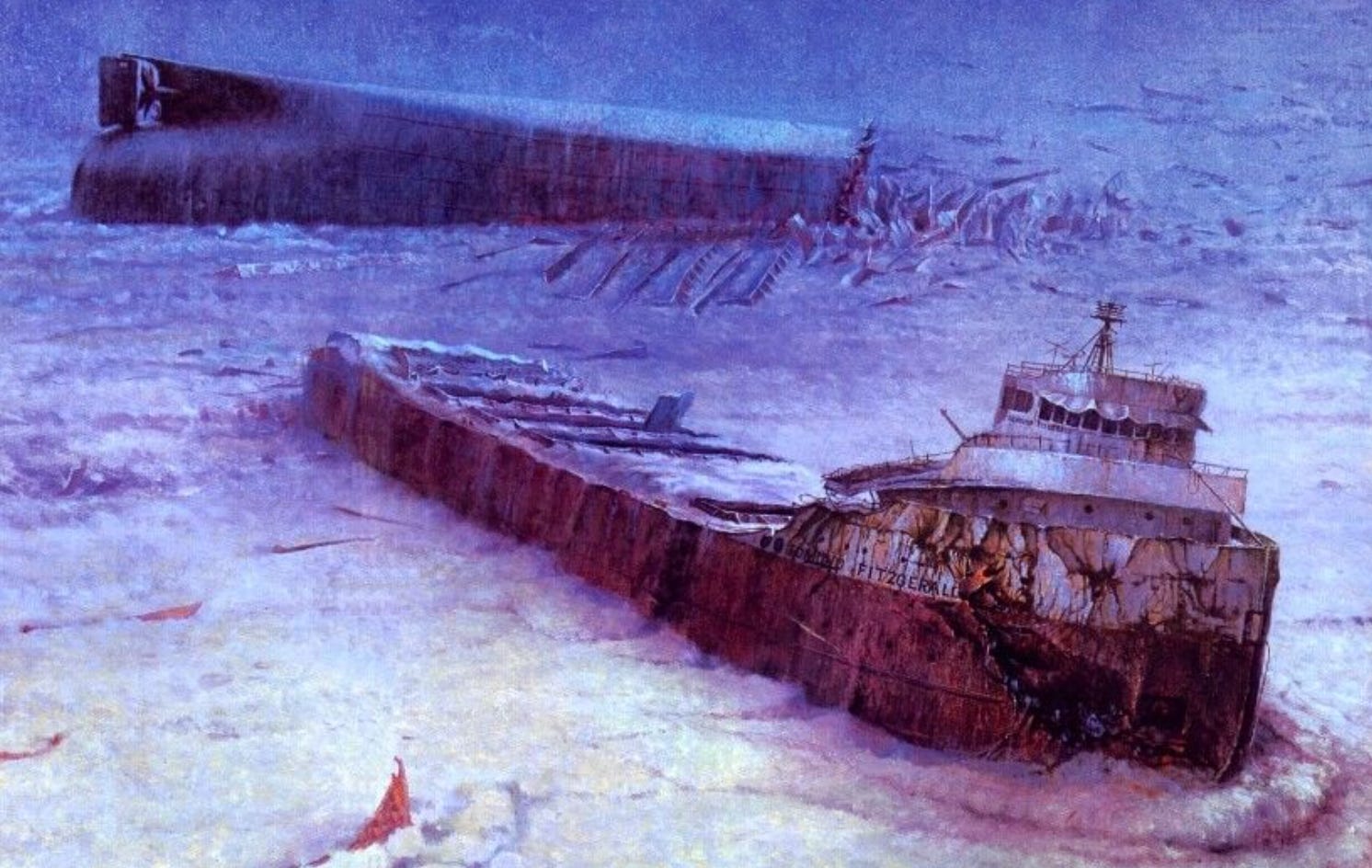
It just so happens that today, November 10th, 2025, is the 50th anniversary of the sinking of the Edmund Fitzgerald. The song by Lightfoot memorializing the tragedy produces a cathartic effect in the listener. A close reading of the the ballad demonstrates that it embodies all the necessary elements of tragedy discussed above.
“Unmerited misfortune” befalls good men.
Oedipus is a great King of Thebes = “The ship was the pride of the American side
Coming back from some mill in Wisconsin; As the big freighters go, it was bigger than most with a crew and captain well seasoned.” (Lightfoot)
The disaster is foretold at the beginning of the narrative.
Teiresius tells King Oedipus that he is the criminal he seeks = the song’s title "The Wreck of the Edmund Fitzgerald” announces the disaster; also Lightfoot tells us, “The lake, it is said, never gives up her dead; When the skies of November turn gloomy.” (Lightfoot)
An event prior to recognition creates fear in the listener.
Oedipus’s conversation with Jocasta surfaces that Laois was murdered where “three highways meet” and before he arrived in Thebes = The wind in the wires made a tattle-tale sound; And a wave broke over the railin.’ (Lightfoot)
Recognition rather than discovery drives the forward momentum of the narrative.
Oedipus recognizes he killed King Laios; that Laois is his father; that Jocasta is his mother = And every man knew, as the captain did too; ‘Twas the witch of November come stealin.’ (Lightfoot)
The listener feels pity after the disaster has occurred.
The Shepherd expresses the pity felt by the listener when he states in his final speech, “[The Messenger] saved him–but for what fate! No man living is more wretched than Oedipus!” (Sophocles, 64) = Does anyone know where the love of God goes; When the waves turn the minutes to hours? (Lightfoot)
The “if only” element in tragedy imagines an alternate chain of causation which is not realized.
If only the Shepherd had killed Oedipus on the lonely mountainside = “The searchers all say they’d have made Whitefish Bay; If [only] they’d put fifteen more miles behind her.” (Lightfoot)
What is my point? It is simply this: when asking the question of what does a Greek play from 429 BCE have to do with a folk-rock ballad composed in 1976, the answer is everything.
Take a moment to listen to “The Wreck of the Edmund Fitzgerald.”
May the memories of those who perished be a blessing.
Lightfoot, Gordon. “The Wreck of the Edmund Fitzgerald. Summertime Dream, 1976. corfid.com
Sophocles. The Oedipus Cycle. (New York: Houghton Mifflin Harcourt, 1977)
“Shepherd.” Oxford Languages and Google, accessed November 10th, 2025.
Aristotle. Poetics. (Mineola, New York: Dover Publications, 1997)